

The Quiet Marketing Ecosystem for Sensitive Entrepreneurs
The Pinterest-Substack Strategy


A few weeks ago, I ran a small experiment. I created a Pinterest account for this newsletter, made 10 pins, and then mostly forgot about them while I got back to writing the next issues.
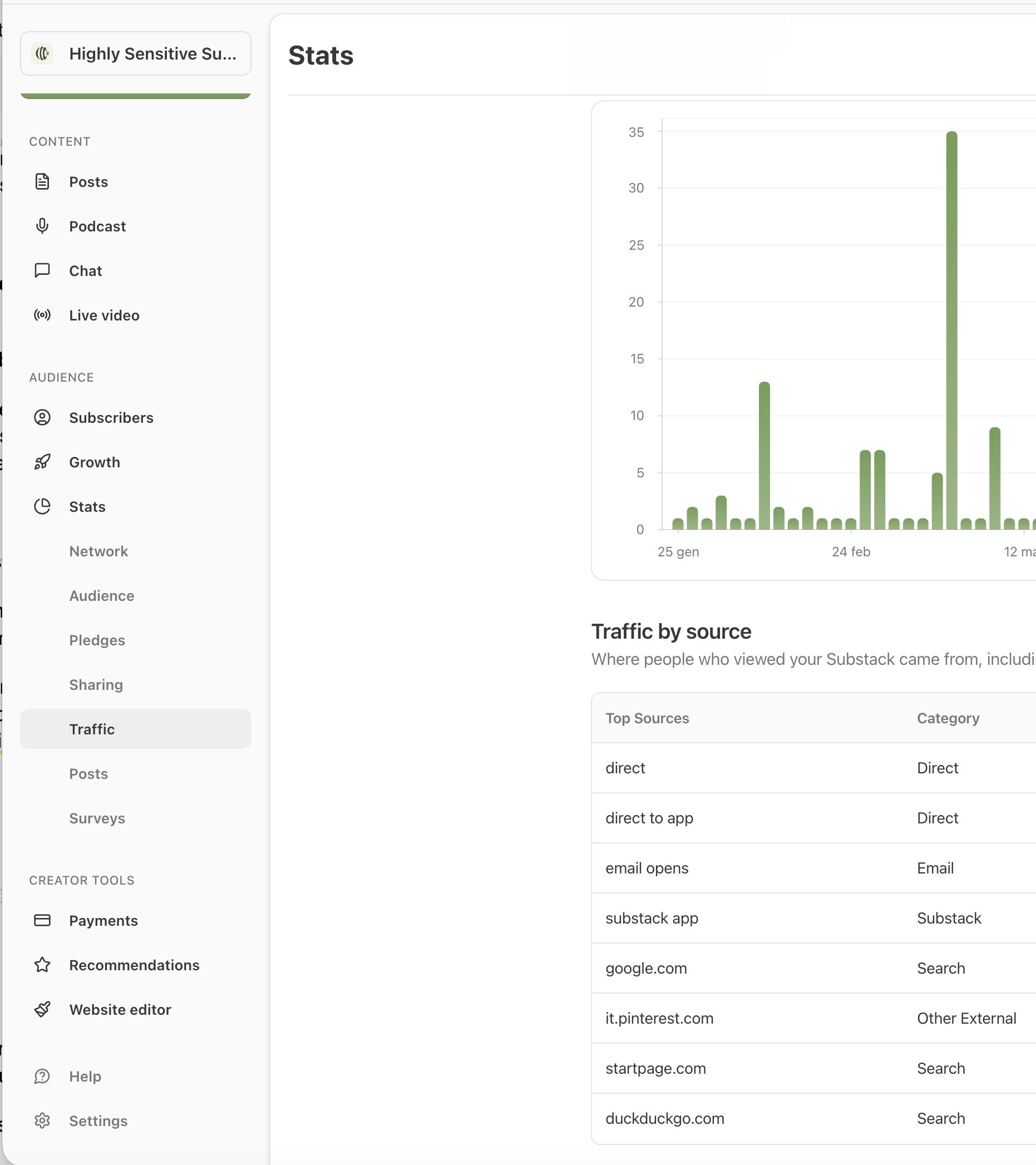
Yesterday, I opened my Substack dashboard and looked at the traffic sources tab, the section that shows you where your new readers are actually coming from. Pinterest was there. Not in a dramatic, overnight-success kind of way. But it was there, quietly sending people over, from pins I had created once and never touched again.
Substack Already Has Its Own Ecosystem
If you have a Substack newsletter, you are not starting from zero when it comes to discoverability. The platform has its own algorithm. You have Notes, which can extend your reach within the Substack world and bring in readers from other writers’ audiences.
But if you want to reach people who have never heard of Substack, people who are out there searching for exactly what you write about, Pinterest is one of the quietest and most underused ways to do that. And unlike a social media post that fades in 24 hours, a pin keeps working. It sits in search results for months and even years. You create it once and it keeps sending people your way long after you have moved on to your next issue.
Two Platforms That Were Built for Depth
What Pinterest and Substack have in common is that neither rewards noise. Substack rewards writers who show up consistently and write things worth reading. Pinterest rewards content that is genuinely useful to someone who is already searching for it.
You are not chasing an algorithm’s attention span on either platform. You are building something that finds the right person at the right time.
That is a different relationship with marketing. A Quiet One.
Pinterest Is a Search Engine, Not a Social Platform!
When someone opens Pinterest, they type something into the search bar: “How to start a newsletter. Journaling prompts for sensitive people. Quiet business ideas for introverts. etc.” They are already looking for something. If your pin is there with the right keywords, they find you, not because you posted at the right time or used trending audio, but because you were already there to be found.
That is how a brand new Pinterest account with 10 pins can still drive traffic. The playing field is not determined by how many followers you have. It is determined by whether your content answers what someone is already searching for.
It Is All About Keywords
Pinterest SEO is not particularly complicated. Keywords go in your pin title, your pin description, your board names, and your board descriptions. Pinterest uses all of that to decide who sees your content and when.
The good news for Substack writers is that you already know your keywords. Your newsletter themes, your recurring topics, the language your readers use when they describe their struggles: that is your keyword strategy. You are not starting from scratch.
And here is where the two platforms speak the same language: Substack lets you set SEO title and description on every newsletter before you send it. Most writers skip this step entirely, but it’s extremely important to set it. Once you have written a strong, keyword-rich title and description for your post, you already have a head start for your Pinterest pin. The language will not be identical across both platforms, and there are some differences, but the core keywords and intent are the same. You are not creating twice. You are extending what you already wrote.
How the Ecosystem Works in Practice
The path is simple. Someone searches a topic on Pinterest, finds your pin, and the pin links directly to your Substack.
You can actually see this inside your Substack dashboard. You click on “Stats”, and then on “Traffic” and it shows where your subscribers are coming from. As you build your Pinterest presence, that referral source starts to appear.
This Is Not a Masterclass!
I am still early in this experiment. Ten pins is not a case study. I will share more as I gather real data and have something more in-depth to offer.
But I wanted to share with you what I am already noticing because I think a lot of Substack writers, particularly those of us who are sensitive and find the loud marketing world genuinely draining, are overlooking this. You do not need more platforms. You need a small, quiet ecosystem that works alongside your writing.
With love,
Cristina